Samburu doesn’t look like the Kenya on postcards. There’s no rolling green savannah, no dense herds of wildebeest. Instead you get red earth, doum palms leaning over a muddy brown river, volcanic hills on the horizon, and heat that shimmers off the ground by mid-morning. It’s a different Kenya, and it comes with a different set of animals to prove it.
Samburu National Reserve sits about 325km north of Nairobi in Samburu County, a small (165 km²) but disproportionately rewarding reserve built around the Ewaso Ng’iro River, the only permanent water source for miles in an otherwise semi-arid landscape. That river is why almost everything worth seeing here shows up sooner or later: elephants wading across it, leopards resting in the fig trees along its banks, and the five species found here and almost nowhere else in Kenya’s southern circuit.
This guide covers what actually makes Samburu worth the drive (or flight), current entry fees, how to get there, when to go, and where to stay, along with the real story behind the reserve’s two most famous residents: a lioness who made international headlines for the wrong reasons, and the elephant research project that’s been running here since before most safari-goers were born.
Why Samburu Is Different: The Samburu Special Five
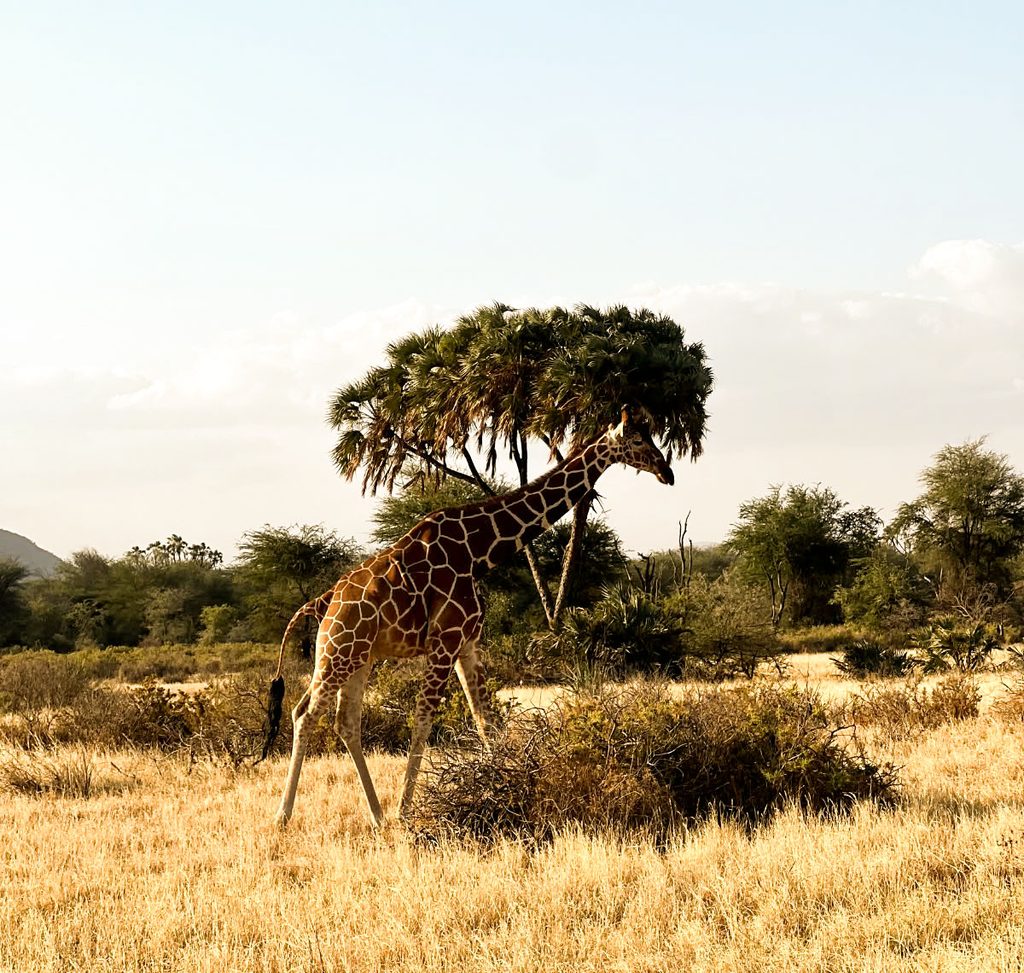
Every Kenya safari itinerary promises the “Big Five.” Samburu’s real draw is a different list entirely, one built for people who’ve already done the Mara or Amboseli and want to see something new. Guides here call it the Samburu Special Five, five species adapted to this dry, thorny ecosystem that you’re unlikely to see (or see well) in Kenya’s more famous parks:
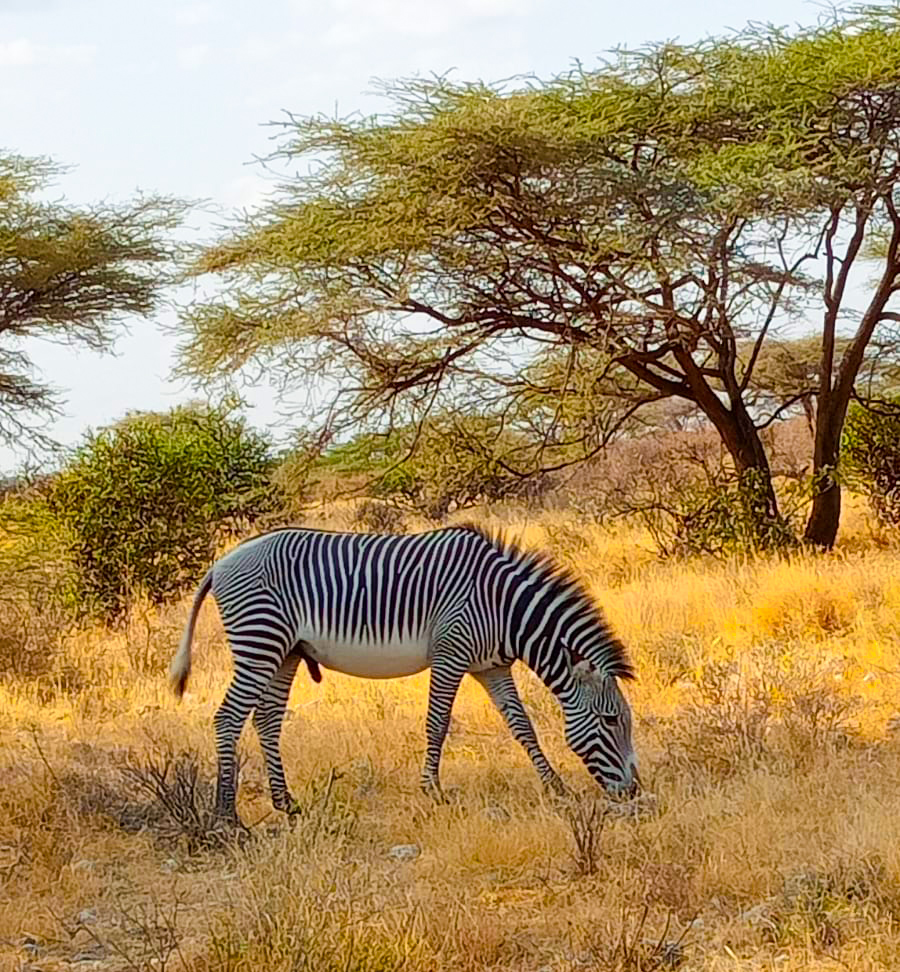
- Grevy’s zebra, the largest and most endangered of the three zebra species, identifiable by its narrow stripes, huge rounded ears, and white belly. The majority of the world’s remaining wild population lives in northern Kenya, largely around Samburu.
- Reticulated giraffe, with sharply defined, liver-colored patches separated by thin white lines, unlike the ragged blotches of the Maasai giraffe further south.
- Beisa oryx, a striking antelope with rapier-straight horns and bold black-and-white facial markings, built for arid country.
- Gerenuk, a long-necked antelope that stands upright on its hind legs, front legs braced against a tree trunk, to browse leaves other antelope can’t reach.
- Somali ostrich, recently split off as its own species rather than a subspecies of common ostrich, recognizable by the blue-grey (rather than pink) neck and legs on breeding males.
Beyond the Special Five, Samburu has healthy numbers of elephant, lion, leopard, and cheetah, plus African wild dogs (painted wolves) passing through periodically, hippos and crocodiles in the river, and over 350 recorded bird species including the striking, ground-dwelling vulturine guineafowl.
Kamunyak: The Lioness Who Adopted Oryx Calves
Samburu has its own strange, well-documented piece of wildlife history, and unlike some stories attached to northern Kenya’s parks, this one actually happened here.
In January 2003, researchers and rangers in Samburu began tracking a young lioness who had done something almost never recorded in the wild: she adopted a baby oryx calf, an animal that would ordinarily be prey, and protected it rather than eating it. She stayed with the calf for around two weeks, fending off other predators, before a male lion from a different pride killed it while she was briefly away drinking from the river. It wasn’t a one-off. Researchers determined she had done the same thing at least five times before, each time with a different oryx calf.
Rangers and researchers named her Kamunyak, meaning “blessed one” in the local Samburu (Maa) language. The story drew journalists, scientists, and tourists to the reserve, and it remains one of the most documented cases of cross-species adoption by a wild predator ever recorded. Kamunyak was last seen in early 2004; what became of her afterward was never confirmed.
It’s a good example of what makes Samburu worth visiting on its own terms rather than as an add-on to a Mara itinerary: the wildlife behavior here, shaped by scarcity and a harsher landscape, doesn’t always follow the script.
Samburu’s Elephants Are Some of the Most Studied on Earth
If you see a collared elephant in Samburu, there’s a good chance it’s part of an active, decades-long research project. Save the Elephants, founded in 1993 by zoologist Iain Douglas-Hamilton, has run its main research station inside Samburu National Reserve since the organization’s early years. It was here that the group pioneered GPS satellite tracking of elephants, technology now used to study elephant movement and combat poaching across Africa.
Over close to three decades, researchers have built detailed life histories for close to 1,000 individual Samburu elephants, tracking births, deaths, family bonds, and the impact of poaching waves on specific herds, making this one of the best-studied wild elephant populations anywhere in the world. It also means the elephants here are unusually habituated to vehicles, which makes for exceptional, relaxed sightings compared to more skittish populations elsewhere.
Not the Elsa/Born Free Park, and That’s Fine
Quick correction, since it comes up a lot: the famous lioness Elsa, raised by George and Joy Adamson and the subject of Born Free, is associated with Meru National Park, not Samburu. The two reserves are in the same general region of northern Kenya and are sometimes confused, but they’re separate parks with separate histories. If the Elsa story is what drew you to this part of Kenya, Meru is the one to visit for that specific connection, we’ll cover it in its own guide. Samburu’s wildlife history is Kamunyak and Save the Elephants, and honestly, that’s plenty.
Samburu National Reserve Entry Fees (2026/2027)
One thing that makes Samburu unusual among Kenya’s protected areas: it’s not managed by the Kenya Wildlife Service. Samburu National Reserve is owned and run by the Samburu County Government, which sets its own fees annually through the county’s Finance Act. The rates are broadly similar to KWS park fees, but it’s worth knowing you’re dealing with a different authority if you have questions about tickets or permits.
| Category | Non-Resident | East African Citizen | Kenyan Citizen |
|---|---|---|---|
| Adult (per 24 hours) | $70 | KSh 1,000 | KSh 500 |
| Child (3-11) / Student (up to 23) | $40 | KSh 500 | KSh 250 |
| Under 3 | Free | ||
Vehicle fees are charged separately: roughly KSh 400 for vehicles under 6 seats, KSh 1,000 for 6-12 seaters, and KSh 2,000 for larger safari vehicles. Camping fees run from $20-30 per person per night depending on residency, plus a flat weekly reservation fee for the campsite itself. Gates accept M-Pesa, card, and cash.
Samburu shares its ecosystem with two neighboring reserves, Buffalo Springs (across the river) and Shaba (further east), both managed separately. Buffalo Springs and Shaba tickets are interchangeable with each other, but a Samburu ticket is separate from both, so if your itinerary crosses between them, confirm with your operator which gates and tickets you’ll need.
Getting to Samburu from Nairobi
| Method | Distance / Duration | Notes |
|---|---|---|
| Self-drive / road transfer | ~310-325km, about 5.5-6 hours | Via Thika Superhighway, Nyeri, Nanyuki, and Isiolo to Archer’s Post. Mostly tarmac; the final stretch into the reserve (roughly the last hour) is unpaved and can be dusty or rough after rain. |
| Scheduled flight | About 1.5 hours | From Wilson Airport (Nairobi) via Air Kenya or Safarilink, landing on an airstrip inside or near the reserve. |
Fuel up in Isiolo before continuing north; it’s the last reliably stocked fuel stop before the reserve. Given the drive length, most travelers combining Samburu with the Mara, Amboseli, or the coast opt to fly rather than spend most of a day on the road each way, especially on shorter trips.
Best Time to Visit Samburu
Samburu is hot and dry for most of the year, which is exactly what draws animals to the Ewaso Ng’iro River and makes sightings reliable almost any month. That said, some periods are noticeably better than others:
- June to September and January to February (dry season): the best wildlife viewing, as animals concentrate around the river and other permanent water. Clear skies, minimal rain, and firm roads throughout the reserve.
- March to May and October to December (wetter months): greener scenery and strong birding, but roads can deteriorate, particularly in April, May, and November, the wettest stretch of the year.
Because Samburu sits at a lower, hotter elevation than parks like Nakuru or the Aberdares, expect genuinely hot midday temperatures year-round. Early morning and late afternoon game drives are noticeably more comfortable, and more productive, than midday ones.
Where to Stay in Samburu
Accommodation is concentrated along the Ewaso Ng’iro River, giving most camps and lodges a front-row seat to elephants and other wildlife coming down to drink.
| Property | Style | Good to Know |
|---|---|---|
| Elephant Bedroom Camp | Luxury tented | Right on the riverbank in the heart of the reserve; regular elephant sightings from camp. |
| Elephant Watch Camp | Luxury tented, eco-focused | Run by the Douglas-Hamilton family, closely tied to the Save the Elephants research project. |
| Larsen’s Camp | Luxury tented | Long-established riverside camp with a strong reputation for personal service. |
| Saruni Samburu | Luxury lodge | Set into a hillside outside the reserve with wide views; often paired with community/cultural visits. |
| Samburu Sopa Lodge | Mid-range lodge | Solid comfort-to-cost ratio, a common pick for group itineraries. |
| Public campsites | Budget | Basic self-catering sites inside the reserve for travelers with their own camping kit. |
Most visitors pair Samburu with 1-2 other northern circuit stops (Buffalo Springs, Shaba, or Meru) or fold it into a longer itinerary that also covers the Mara or Amboseli. Because of the distance involved, we generally recommend at least 2 nights here to make the travel time worthwhile.
Plan Your Samburu Safari
Samburu rewards travelers who want to see a genuinely different side of Kenya, not just a repeat of the Mara. If you’re building an itinerary that includes the northern circuit, our team can help you combine Samburu with the Mara, Amboseli, or the coast into a single trip that makes sense logistically and doesn’t waste days on the road. Check out our safari packages or get in touch and we’ll put together an itinerary around what you actually want to see.
Frequently Asked Questions
Is Samburu worth visiting if I’m already doing the Masai Mara?
Yes, if you have time for it. The wildlife doesn’t overlap much: Samburu’s Special Five (Grevy’s zebra, reticulated giraffe, gerenuk, Beisa oryx, Somali ostrich) aren’t reliably found in the Mara, and the landscape, dry, red-earthed, river-fed, is a genuinely different experience. It works best as an addition to a longer itinerary rather than a replacement for the Mara.
Is the Elsa/Born Free story connected to Samburu?
No, that’s a common mix-up. Elsa the lioness and the Adamsons are associated with Meru National Park, a separate reserve in the same general region. Samburu’s own famous wildlife story is Kamunyak, a lioness documented adopting oryx calves in 2003.
How much does it cost to enter Samburu National Reserve?
As of 2026, non-resident adults pay $70 per 24 hours, children and students pay $40. Kenyan citizens pay KSh 500 (adults) or KSh 250 (children/students). Vehicle fees are charged separately. Samburu is managed by the Samburu County Government rather than KWS, so it sets its own fees independently of national park rates.
How do I get to Samburu from Nairobi?
By road it’s roughly 310-325km and takes about 5.5 to 6 hours via Nyeri, Nanyuki, and Isiolo, with the final stretch unpaved. Most operators recommend flying instead: scheduled flights from Wilson Airport take about 1.5 hours and land on an airstrip in or near the reserve.
When is the best time to visit Samburu?
June through September and January through February offer the best game viewing, when dry conditions push animals to the river. March-May and October-December are greener and good for birding, but roads can get rough, especially in April, May, and November.
Continue planning: Most visitors reach Samburu by light aircraft. Read our luxury Kenya fly-in safaris guide for flight times, costs, and sample itineraries.
Leave a Reply