Surana Mara sits high above the Mara River on the Mara Triangle side of the ecosystem, looking out across the plains toward the Serengeti border nine kilometres away. It is a small camp — twelve suites — and that number is the whole point. You are not queuing for breakfast or sharing a sighting with five other vehicles from your own lodge.
The Mara Triangle is the quieter western third of the reserve. It carries a fraction of the vehicle traffic of the eastern side around Sekenani, while the migration crossings on the Mara River happen directly below the camp between roughly July and October. For anyone who has seen photographs of thirty minibuses at a river crossing and wondered whether the Mara is worth it, this is the answer to that worry.
Guests get access to professional Nikon equipment and guidance from a photographer who lives on the property. Game drives run in 4x4 Land Cruisers fitted with onboard charging, so you are not rationing battery life across a ten-hour day. We have not found another camp in our portfolio that offers this.
If photography is any part of why you are coming to Kenya, this changes the value calculation. Hiring a specialist photographic guide privately is normally a significant additional cost, and carrying a long lens through three airports is a decision most people regret. Here the gear and the expertise are already waiting.
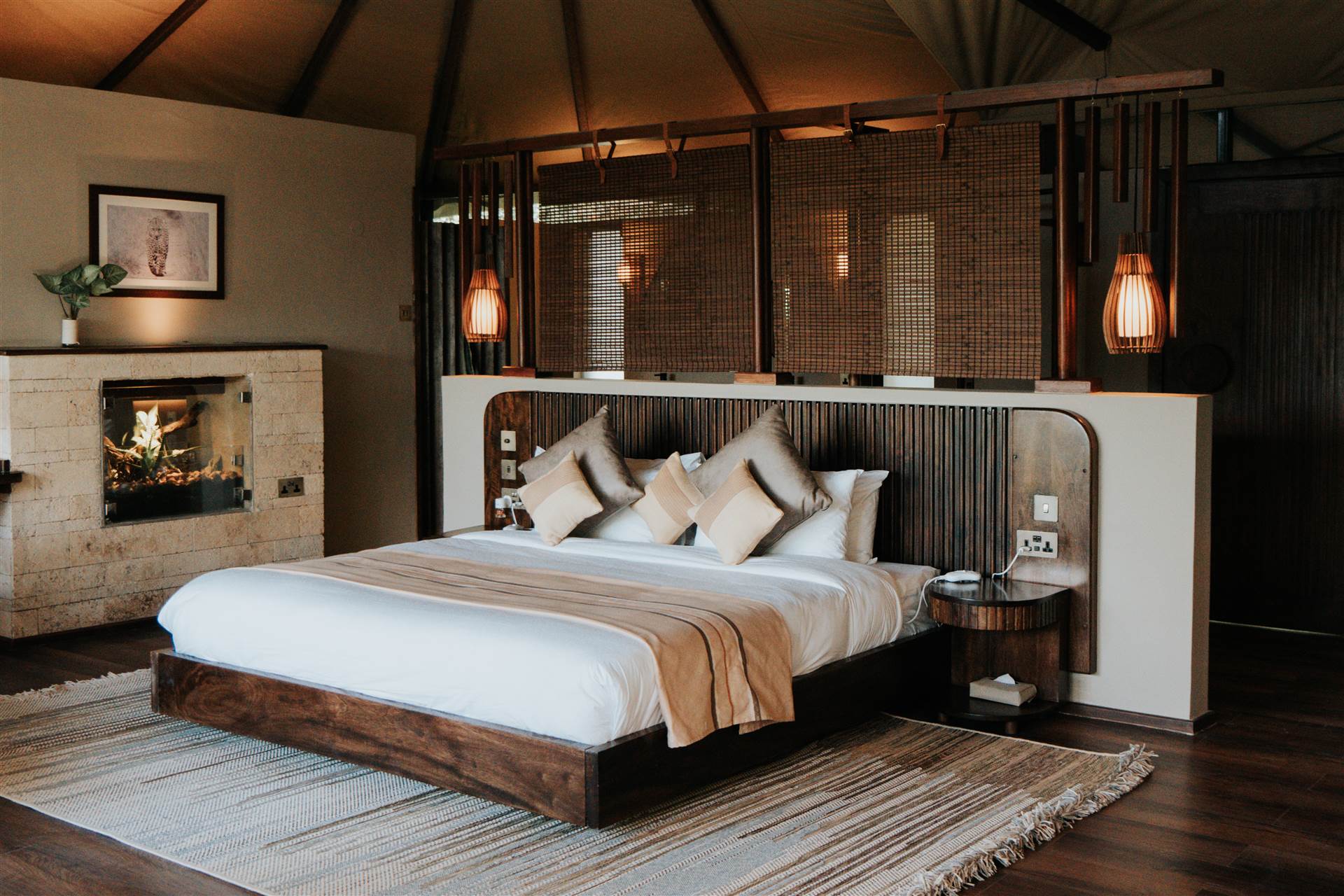
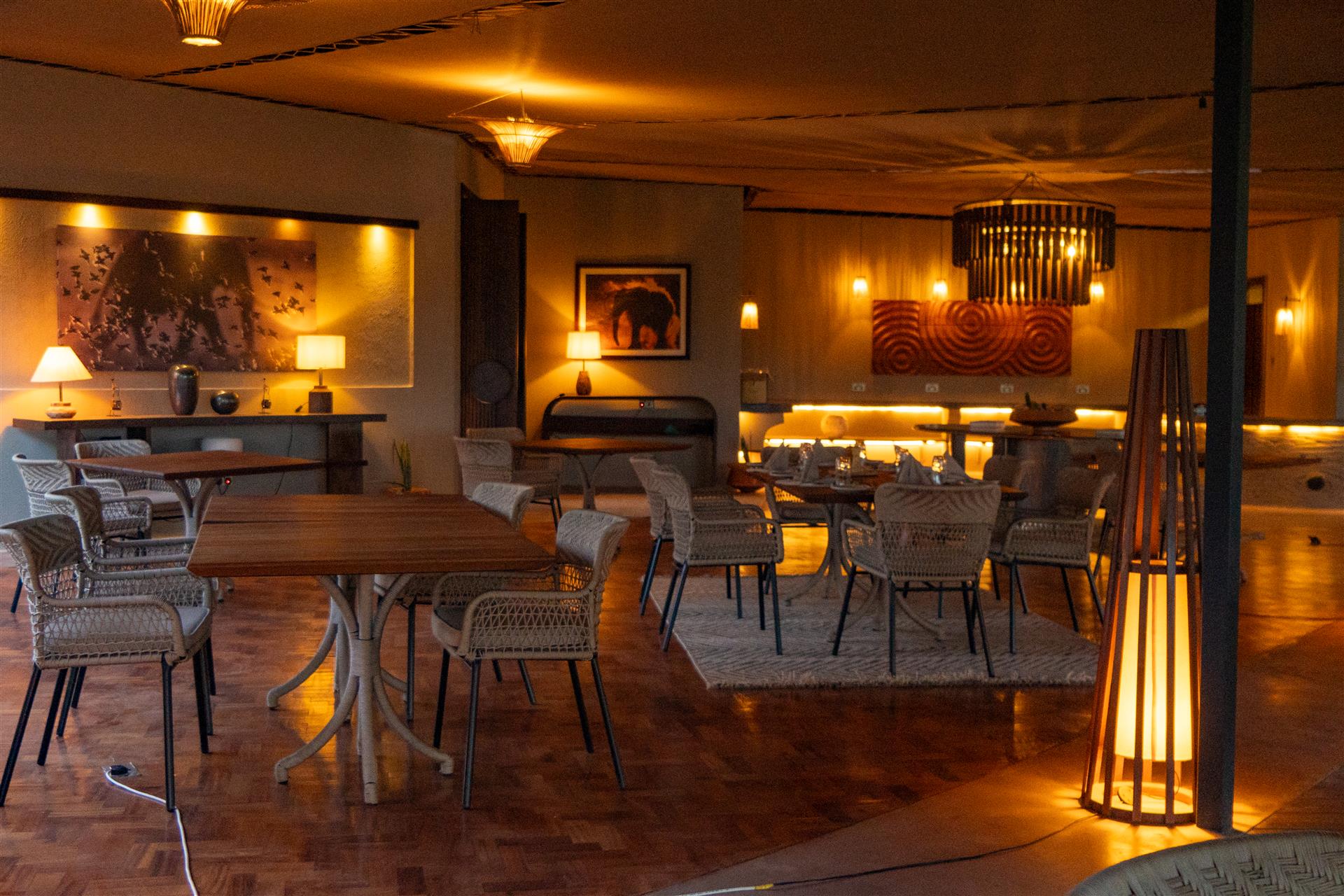
Suite interior and the dining area. Images supplied by the property.
All twelve suites are the same category, so there is no better or worse room to negotiate over. Hardwood floors, a king-size bed and a separate lounge area open onto a private deck facing the river.
Check-in is from 12:00 and check-out is 10:00.
The term gets used loosely across Kenya, so here is the specific list for this property:
The kitchen builds personalised five-course menus rather than running a buffet, which is unusual at this size and a genuine difference if you have dietary requirements — tell us in advance and it gets handled properly rather than improvised.
There are two bars stacked one above the other on the riverbank. The upper one looks out across the river into the Mara Triangle; the lower one is a more enclosed riverside space with a wine cellar used for tastings. After dark there is a sunken lounge at the water's edge lit by fire.
Days sit around 25–27°C and nights drop to 12–15°C, so bring a fleece for dawn game drives — the open vehicles are cold before sunrise and people consistently underpack for this.
June to October is the driest stretch and the peak window for migration river crossings. Outside that, resident lion, leopard, cheetah and elephant mean the game viewing stays strong year-round. The long rains fall March to May, heaviest in April; the short rains come in November and December.
| Period | Season | What it means for you |
|---|---|---|
| 7 Apr – 31 May | Low | Lowest rates of the year. Green, dramatic skies, some heavy afternoon rain. |
| 1 Jan – 6 Apr | High | Dry, calving season on the plains, good predator activity. |
| 1 – 30 Jun | High | Migration herds beginning to arrive from the south. |
| 1 Jul – 30 Sep | Peak | Migration crossings on the river below camp. Book many months ahead. |
| 1 Oct – 20 Dec | High | Herds moving back south; quieter than peak, still excellent. |
| 21 – 31 Dec | Festive | Christmas and New Year. Highest demand, minimum-stay rules apply. |
For a stay of three nights or more we usually recommend flying at least one leg. The road is genuinely beautiful for the first half and genuinely tiring for the second.
Being straight with you: this camp is not currently a default in any of our fixed packages. It is a premium property we contract directly, and we build it in on request. Any of these itineraries can be re-costed around it:
If you are weighing this against our standard Mara camps, see them all on the accommodations page. We would rather put you somewhere that suits you than somewhere that pays us more.
Tell us your budget and dates and we will put two or three Mara options side by side, honestly compared.